Dental Implants – Frequently Asked Questions (FAQ)
How long implants last, whether they hurt, how long treatment takes, who is a candidate, when a bone graft is needed, the real risks, and how implants compare with bridges and dentures. Each answer is backed by published research, with Elite’s own pricing at the end.

Quick answer: A dental implant is a titanium post that replaces a tooth root and holds a crown, bridge or denture. In systematic reviews, about 96% of implants are still in place after 10 years. Most patients describe mild pain that peaks the day after surgery, and a single implant usually takes four to six months from start to finish.
There’s a note on your phone called “implant questions.”
It started with three. Does it hurt? How long does it last? What does it cost?
Now it has fourteen, half of them typed at midnight after reading something online that contradicted the last thing you read.
The simple answer is that dental implants are one of the most studied treatments in dentistry, and most of the questions on that list have clear answers.
The more honest answer is that a few of them depend on you: your bone, your health, your habits and which teeth are missing. Here are the questions patients ask most, with the research behind each answer.
What is a dental implant, exactly?
A dental implant replaces the root of a tooth, not just the part you see.
It has three parts. A titanium post is placed in the jawbone. An abutment connects to it. A crown, bridge or denture attaches on top.
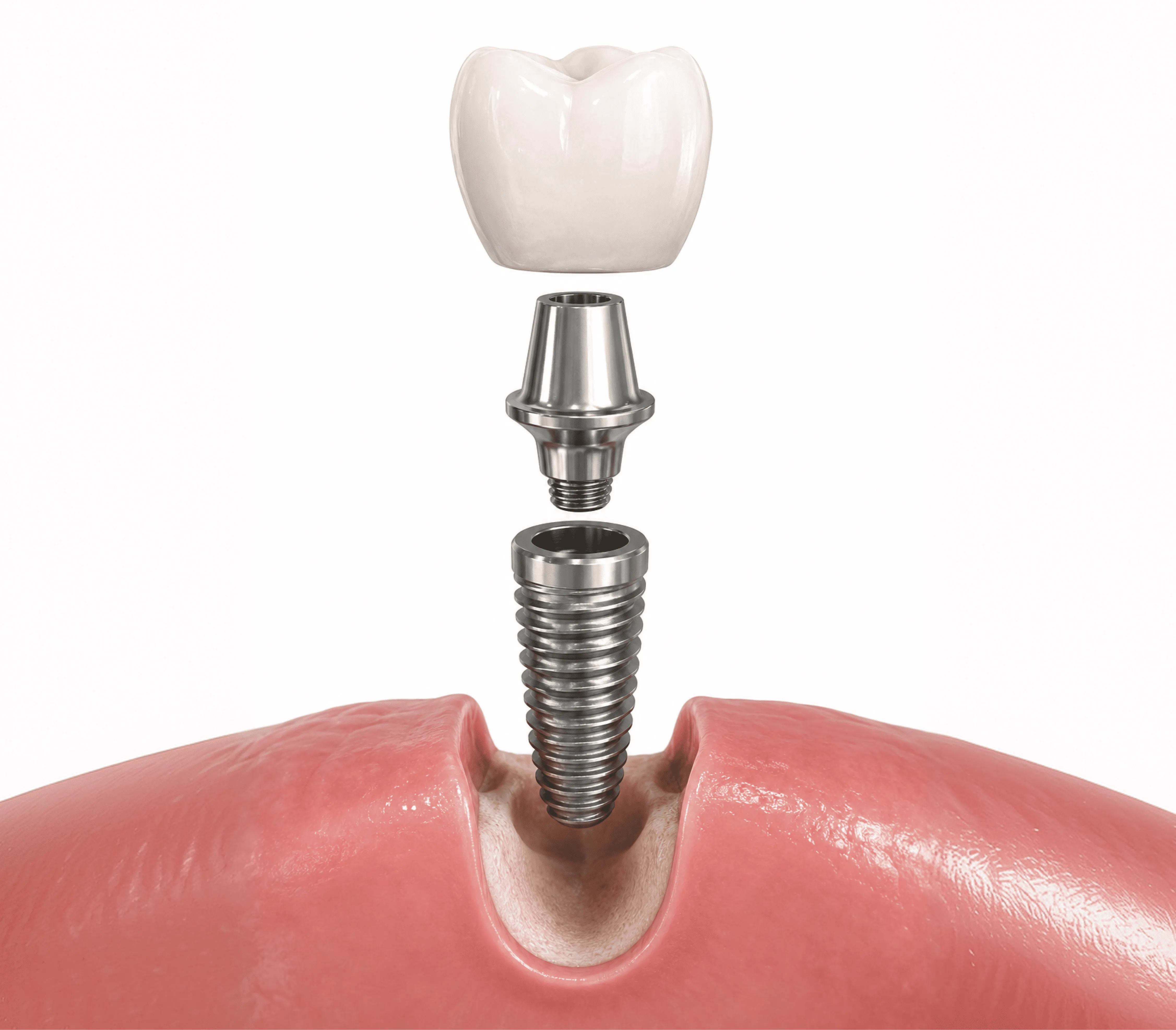
For a single tooth at Elite, the oral surgeon places the implant and your general dentist places the final crown. The full sequence is on the single dental implants page.
How long do dental implants last?
For most people, a very long time. A 2019 systematic review estimated that 96.4% of implants were still in place after 10 years (Howe et al., 2019).
That same review ran a more conservative analysis that accounted for patients lost to follow-up. It came out at 93.2%, which is still high but worth knowing about.
The crown on top is a different story. It takes the wear. In a large review, 89.4% of implant-supported single crowns were still in service at 10 years (Pjetursson et al., 2007). Elite’s own guidance is to expect a crown replacement somewhere around the 10 to 15 year mark.
The implant is built to stay. The crown on top is the part you may one day replace.
Does getting a dental implant hurt?
Less than most people expect.
In a study of 234 patients who received 510 implants, pain peaked 24 hours after surgery at an average of about 2 out of 10, then eased steadily. Most patients reported mild pain at every check, and only a few had moderate or severe pain (Al-Khabbaz et al., 2007).
The same study found that pain at 24 hours strongly predicted pain at one week. If day one is easy, the rest usually is too.
During surgery, you have options. Local anesthesia keeps you awake but numb. IV sedation lets you sleep through it, and Elite provides it in-house.
How long does the dental implant process take?
It depends on how many teeth you’re replacing and how ready the bone is.
For a single implant, Elite’s published timeline runs about four to six months. That’s a consultation with 3D imaging, surgery a few weeks later, three to four months for the implant to fuse with bone, then the final crown.
Full-arch treatment moves differently. Implants and provisional teeth go in on day one, a prototype is tried in at week 8, and the final bridge is delivered around week 12. Some cases take four to five months, depending on bone and healing.
Can it all happen faster? Sometimes. A systematic review of placement and loading protocols found conventional loading the best documented, and that the loading protocol chosen influences how immediately placed implants do (Gallucci et al., 2018). That’s the reasoning behind the honest version of teeth in a day.
Am I a good candidate for dental implants, or too old?
Age on its own is rarely the deciding factor.
A systematic review of patients 65 and older reported implant survival of 97.7% at one year, 96.2% at five years and 91.2% at ten years. The authors concluded that age alone should not be a limiting factor (Srinivasan et al., 2017).
There’s a nuance, though. The 2019 survival review’s conservative analysis found a lower estimate for patients 65 and older, 91.5% (Howe et al., 2019). Older isn’t a no. It’s a reason for careful planning.
The factors that matter more are bone, gum health, medical history, medications and smoking. In a large meta-analysis, implants failed in 6.35% of smokers compared with 3.18% of non-smokers (Chrcanovic et al., 2015).
Do I need a bone graft before getting an implant?
Not always, but often enough that it’s worth asking early.
Bone starts shrinking soon after a tooth is lost. Within six months of an extraction, the ridge loses roughly 29–63% of its width and 11–22% of its height (Tan et al., 2012).
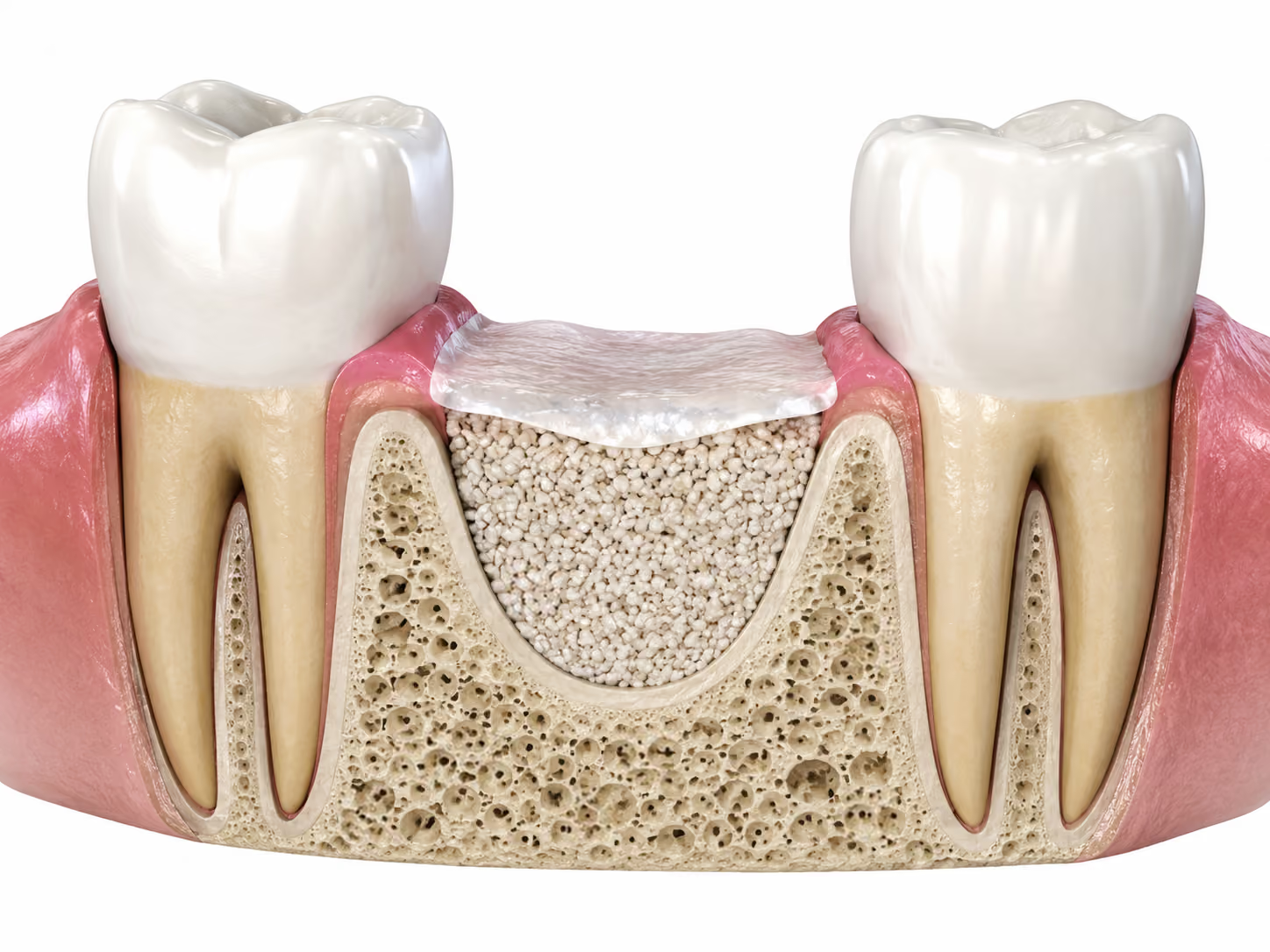
That’s why a bone graft is sometimes placed at the same visit as the extraction or the implant. Upper back teeth add another variable, the sinus, which we cover in our guide to how molar implants restore chewing power.
The Biggest Difference: Planning, Not the Implant Itself
Patients often ask which implant brand is best. It’s a fair question, but it’s rarely the one that decides the outcome.
What decides it is where the implant goes, at what angle, into how much bone, and how far it sits from the sinus or the nerve.
That’s why Elite plans with a 3D cone beam CT scan and digital surgical guides. Guided surgery is accurate but not perfect. A meta-analysis of static computer-guided surgery found an average deviation of 1.2 mm at the entry point, 1.4 mm at the tip and 3.5 degrees in angle (Tahmaseb et al., 2018).
Good planning builds in room for those millimeters before surgery day.
What are the risks of dental implants?
Implants are predictable, not risk-free. These are the issues the research tracks most closely.
- Inflammation around the implant. A systematic review estimated a weighted mean prevalence of 43% for peri-implant mucositis and 22% for peri-implantitis, with wide variation between studies (Derks & Tomasi, 2015).
- Complications with single crowns. Over five years, cumulative rates reached 7.1% for soft tissue problems, 8.8% for screw loosening and 7.1% for aesthetic issues (Jung et al., 2012).
- Smoking. It was linked to more implant failures, more postoperative infections and more bone loss (Chrcanovic et al., 2015).
- Healing time. Bone grafts and sinus lifts add months, and that time is part of the plan, not a delay.
Most of these are manageable with good hygiene, regular checkups and an honest conversation about habits before surgery.
Can a dental implant get a cavity?
No. Titanium and crown materials don’t decay the way natural teeth do. In the review comparing bridges with implants, decay showed up as a problem for the natural teeth holding bridges, not for the implants (Pjetursson et al., 2007).
But the gum and bone around an implant can still get inflamed, and that’s the bigger long-term threat (Derks & Tomasi, 2015).
So you care for an implant much like a natural tooth:
- Brush twice a day and clean between your teeth, including around the implant crown.
- Keep your regular dental cleanings and exams.
- Tell your dentist early if the gum around the implant bleeds, swells or feels tender.
Will people be able to tell I have an implant?
Usually not. A well-planned implant crown is shaped and shaded to match the teeth beside it.
That said, it isn’t guaranteed. In the five-year data on implant-supported single crowns, 7.1% had an aesthetic complication of some kind (Jung et al., 2012). That’s one more reason the planning matters as much as the surgery.
Implants vs bridges vs dentures: which is right for me?
It depends on how many teeth are missing and what the teeth around them look like.
Prices and positions are from Elite Oral Surgery’s published service pages. Survival figures are pooled estimates from a systematic review, not a promise for any one patient.
If you’re replacing a full arch, compare snap-in dentures and fixed full-arch implants side by side. They solve different problems.
What We Look at Before Recommending Dental Implants
- Your medical history and medications. Some conditions and drugs change how bone heals, so we review everything you take.
- Your bone, in 3D. Height, width and density at each site, plus the sinus and nerve positions.
- Your gums. Active gum disease needs treatment first (Derks & Tomasi, 2015).
- Your bite. What the implant will chew against, and whether you clench or grind.
- Your habits. Smoking and vaping change the risk picture (Chrcanovic et al., 2015).
- Your goals and budget. A single implant, a bridge and a snap-in denture can all be reasonable answers for different people.
How much do dental implants cost in Bonney Lake?
Elite publishes its pricing so patients from Bonney Lake, Tacoma, Puyallup and the wider Puget Sound can plan before the first visit.
- Single implant, complete with crown: typically $3,500–$6,000 in the South Sound market
- Bone grafting, when needed: add $300–$800
- IV sedation, if you choose it: add $400–$700
- Full-arch implants: $15,000 per arch, all-inclusive
Insurance usually helps with part of a single implant, but the annual maximum often limits how much. Our guide to dental implant insurance walks through what’s covered and what isn’t.
Final Takeaways
- About 96% of implants are still in place at 10 years in systematic reviews. Crowns may need replacing sooner.
- Most patients report mild pain that peaks the day after surgery.
- A single implant usually takes four to six months. Full-arch treatment starts with same-day provisional teeth.
- Age alone isn’t a barrier. Bone, gums, health and smoking matter more.
- Planning with 3D imaging matters more than the brand of implant.
- The right option depends on how many teeth are missing and the teeth around them.
Bring your list of questions
Elite Oral Surgery opens in Bonney Lake in April 2027. Until then, you can send five phone photos for a free virtual consultation and get a written case review.
Join the opening list to hear as soon as consultations open, or call (253) 676-9113.
Research References
- Howe MS, Keys W, Richards D. Long-term (10-year) dental implant survival: A systematic review and sensitivity meta-analysis. J Dent. 2019;84:9-21. https://doi.org/10.1016/j.jdent.2019.03.008
- Pjetursson BE, Brägger U, Lang NP, Zwahlen M. Comparison of survival and complication rates of tooth-supported fixed dental prostheses (FDPs) and implant-supported FDPs and single crowns (SCs). Clin Oral Implants Res. 2007;18(Suppl 3):97-113. https://doi.org/10.1111/j.1600-0501.2007.01439.x
- Al-Khabbaz AK, Griffin TJ, Al-Shammari KF. Assessment of pain associated with the surgical placement of dental implants. J Periodontol. 2007;78(2):239-246. https://doi.org/10.1902/jop.2007.060032
- Gallucci GO, Hamilton A, Zhou W, Buser D, Chen S. Implant placement and loading protocols in partially edentulous patients: A systematic review. Clin Oral Implants Res. 2018;29(Suppl 16):106-134. https://doi.org/10.1111/clr.13276
- Srinivasan M, Meyer S, Mombelli A, Müller F. Dental implants in the elderly population: a systematic review and meta-analysis. Clin Oral Implants Res. 2017;28(8):920-930. https://doi.org/10.1111/clr.12898
- Chrcanovic BR, Albrektsson T, Wennerberg A. Smoking and dental implants: A systematic review and meta-analysis. J Dent. 2015;43(5):487-498. https://doi.org/10.1016/j.jdent.2015.03.003
- Tan WL, Wong TLT, Wong MCM, Lang NP. A systematic review of post-extractional alveolar hard and soft tissue dimensional changes in humans. Clin Oral Implants Res. 2012;23(Suppl 5):1-21. https://doi.org/10.1111/j.1600-0501.2011.02375.x
- Tahmaseb A, Wu V, Wismeijer D, Coucke W, Evans C. The accuracy of static computer-aided implant surgery: A systematic review and meta-analysis. Clin Oral Implants Res. 2018;29(Suppl 16):416-435. https://doi.org/10.1111/clr.13346
- Derks J, Tomasi C. Peri-implant health and disease. A systematic review of current epidemiology. J Clin Periodontol. 2015;42(Suppl 16):S158-S171. https://doi.org/10.1111/jcpe.12334
- Jung RE, Zembic A, Pjetursson BE, Zwahlen M, Thoma DS. Systematic review of the survival rate and the incidence of biological, technical, and aesthetic complications of single crowns on implants reported in longitudinal studies with a mean follow-up of 5 years. Clin Oral Implants Res. 2012;23(Suppl 6):2-21. https://doi.org/10.1111/j.1600-0501.2012.02547.x
Common questions
It’s rare. In a clinical study of 1,500 consecutive implant patients, nine (0.6%) had positive reactions on titanium allergy testing (Sicilia et al., 2008). If you have a history of metal allergies, mention it at consultation.
It depends on the medication, the dose and how long you’ve taken it, so tell your surgeon before anything is planned. Bone-strengthening drugs such as bisphosphonates and denosumab are linked to a rare jaw complication called medication-related osteonecrosis of the jaw, and the AAOMS position paper sets out how surgeons assess that risk before oral surgery (Ruggiero et al., 2022).
A referral from your general dentist is requested for single implants, but it isn’t strictly required. Full-arch consultations are complimentary and don’t need a referral.
Yes. Elite lists HSA and FSA funds as eligible for implant treatment and provides the documentation and procedure coding needed for reimbursement. HSA funds have no annual deadline, while FSA funds typically expire at year-end.
It depends on the case. For most single implants, a small healing cap sits at the gum line while the implant fuses with bone. Immediate provisional crowns are available for select cases when bone quality supports them. For full-arch treatment, a printed provisional bridge is placed on the day of surgery.
About five, based on Elite’s published timeline: a consultation with 3D imaging, the surgery a few weeks later, a progress check during healing, then visits with your general dentist for impressions and the final crown.
Heading 1
Heading 2
Heading 3
Heading 4
Heading 5
Heading 6
Lorem ipsum dolor sit amet, consectetur adipiscing elit, sed do eiusmod tempor incididunt ut labore et dolore magna aliqua. Ut enim ad minim veniam, quis nostrud exercitation ullamco laboris nisi ut aliquip ex ea commodo consequat. Duis aute irure dolor in reprehenderit in voluptate velit esse cillum dolore eu fugiat nulla pariatur.
Block quote
Ordered list
- Item 1
- Item 2
- Item 3
Unordered list
- Item A
- Item B
- Item C
Bold text
Emphasis
Superscript
Subscript
Bring your questions to consultation.
General answers only go so far. Your timeline, cost and candidacy depend on your bone, your health and the teeth involved, which is what the consultation and 3D imaging establish in writing.