Six implants per arch, when six is the right answer.
The same $15,000 all-inclusive price as All-on-4, because the protocol you receive should be a clinical decision, not a price-tier upsell. Performed personally by board-certified oral surgeon Dr. Jonathan Volland.
What All-on-6 actually is.
A full-arch fixed prosthesis supported by six dental implants instead of four, typically chosen when bone density, bite mechanics, or anatomical factors make six implants the right clinical answer. Six titanium implants distributed across the arch, one fixed zirconia prosthesis, and two additional anchor points for biomechanical redundancy.
Two anterior implants
Two intermediate implants
Two posterior implants
One fixed prosthesis
Built-in redundancy
A clinical decision, not a premium tier.
All-on-6 isn’t a premium tier of full-arch implants. It’s a different protocol matched to specific clinical situations. Here are the factors that guide protocol selection at consultation.
When All-on-6 is often indicated
When All-on-4 is usually preferred
Six implants are not categorically better than four. Published clinical literature shows comparable long-term survival between the two protocols when both are properly planned and executed, what changes is which is biomechanically appropriate for which patient.
All-on-4 vs. All-on-6, side by side.
No marketing, no winner, the honest comparison between two clinically validated protocols, each appropriate for different patient situations.
All-on-4
The appropriate protocol for the majority of full-arch patients, with the longest published outcome data of any modern full-arch approach.
All-on-6
Offers redundancy and can distribute load more evenly when bone allows, with survival comparable to All-on-4 in well-planned cases.
Three appointments. Same as All-on-4.
The All-on-6 workflow follows the same three-visit sequence as All-on-4, slightly longer surgical time on day one, then the same restorative timeline through to final zirconia at week 10–12.
Implant placement, same-day provisional.
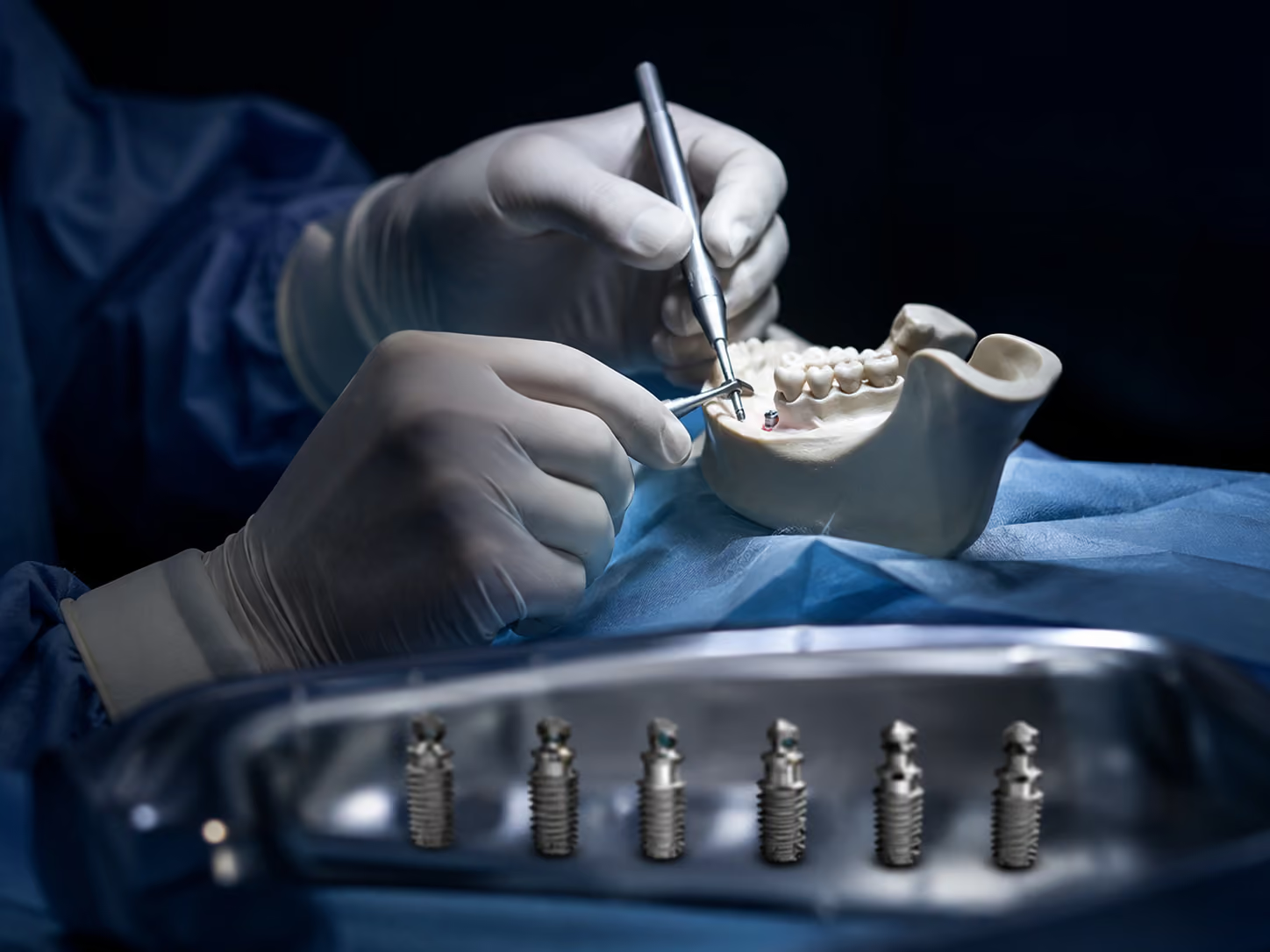
Six implants placed under in-house IV sedation, roughly 3 hours per arch. A printed PMMA provisional bridge is seated the same day for immediate function on a soft-food diet.
Prototype try-in.
A printed prototype of the final prosthesis is evaluated for bite, esthetics, and phonetics. Refinements are made based on how you’ve lived with the provisional, and the final design is approved with your input.
Final zirconia delivered.
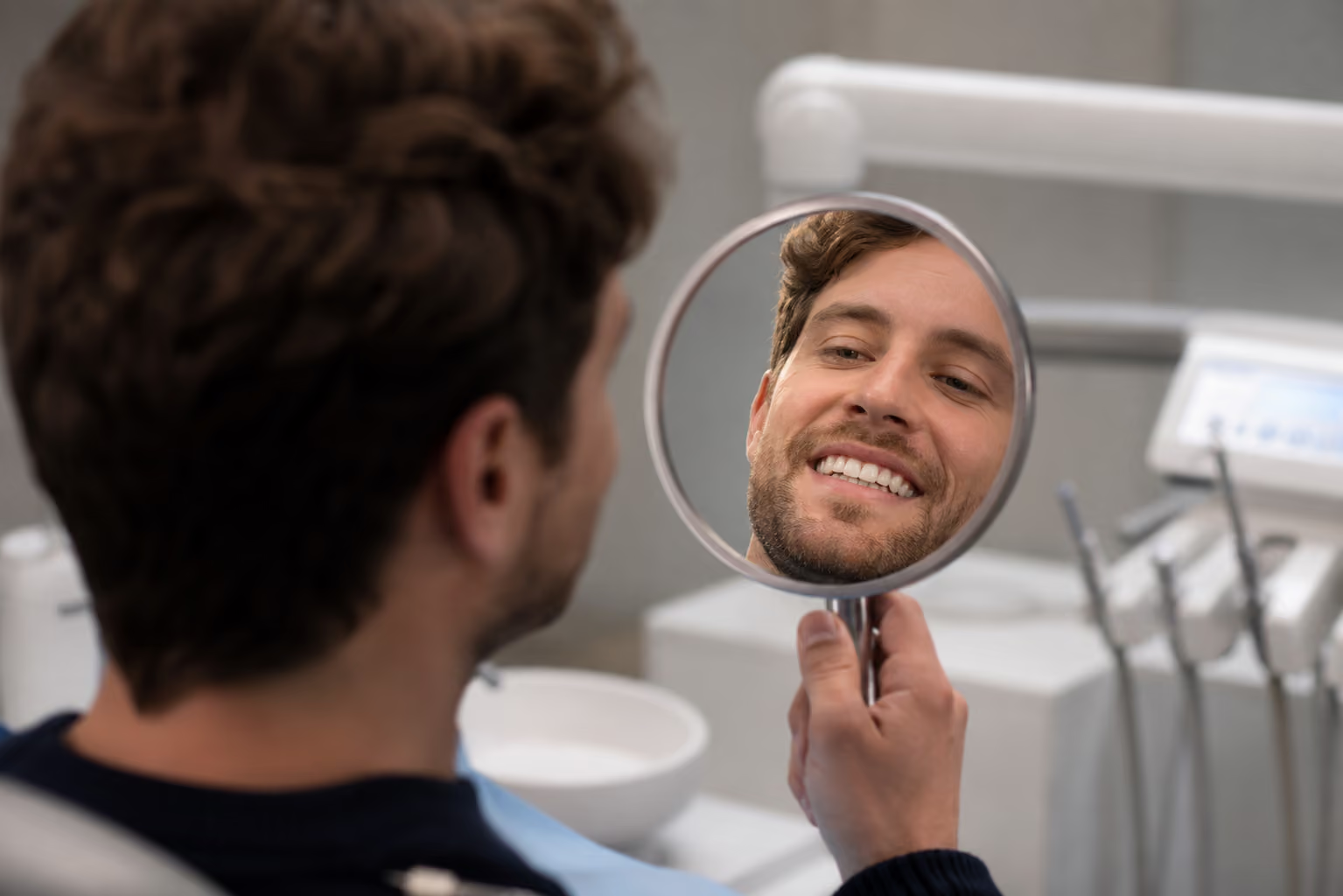
Your permanent zirconia bridge with titanium framework is seated, designed for decades of service, with hygiene instruction specific to six-implant prostheses.

What the research shows on All-on-6.
All-on-6 has been studied extensively, though the published literature has fewer long-term datasets than All-on-4, largely because the All-on-4 concept was published first and has more years of accumulated follow-up. Across the comparative literature, both protocols achieve high implant survival in healthy patients with adequate bone, with no major difference in long-term survival when both are properly planned and executed.
How Elite’s All-on-6 compares.
Pricing data drawn from competitor public marketing, third-party industry reports, and patient-reported outcomes. Updated April 2026.
Calm, careful, and clear, every time.
The same $15,000, four implants or six.
Elite prices All-on-4 and All-on-6 identically at $15,000 per arch, all-inclusive. The protocol you receive is determined by your clinical situation, not by what generates more revenue for the practice.
From $185/month
Five lending partners. Decisions in minutes. HSA/FSA eligible. Payment plans structured around your budget.
First 40 surgical patients.
Reserved for patients who join the opening list. Applied at consultation, no commitment required to secure your place.
Answers, before you ask.
Neither is categorically better, they’re different protocols matched to different clinical situations. Published comparative literature shows comparable long-term implant survival between the two, typically 95%+ in well-selected cases. All-on-4 has the deepest longitudinal data (18+ years); All-on-6 offers biomechanical redundancy. The right protocol depends on your bone density, bite mechanics, and anatomy, determined at consultation.
So the protocol you receive is a clinical decision, not a financial one. Pricing the protocols differently creates an incentive to recommend one over the other for revenue reasons, pricing them the same removes that incentive entirely. The recommendation reflects clinical fit, not cost.
You can ask, and we’ll discuss the clinical reasoning either way at consultation. The recommendation is based on your 3D imaging and bite analysis, not on what you request, and since we don’t charge more for All-on-6, there’s no financial reason to steer you in either direction.
Sometimes. All-on-6 generally requires more bone availability across the arch than All-on-4, particularly in the posterior regions where the additional implants are placed. If grafting would be required to enable All-on-6 but All-on-4 can be performed without it, All-on-4 is often the right choice.
Two differences: pricing and surgeon continuity. ClearChoice typically prices six-implant cases at $25,000–$40,000 per arch with a zirconia upcharge; Elite prices All-on-6 at $15,000, zirconia included. ClearChoice partners with surgeons at each location, so the surgeon you meet may not be the one who treats you. At Elite, Dr. Volland performs and follows up on every case personally.
The available evidence doesn't support a meaningful longevity difference between the two when both are properly planned and executed. Both sit above 95% survival in the comparative literature. Oral hygiene, smoking, glycemic control, bite forces, and maintenance compliance affect long-term outcomes more than implant count.
Recovery is comparable to All-on-4, with surgical time about 30 minutes longer for six implants. Swelling, bruising, and discomfort are similar, and the same 6–8 week soft-food period applies to both. The only difference most patients notice is slightly more soreness on day one, gone by day 3–5.
Dental insurance typically provides limited coverage for both, usually a small portion attributed to extractions or the prosthesis, with lifetime caps of $1,000–$3,000 in most plans. Most patients use HSA/FSA funds or financing through one of our five partners, which work the same regardless of protocol.
The first step is a conversation, not a commitment.
Full mouth implant consultations are complimentary, including 3D imaging and a written treatment plan with itemized pricing. You’ll meet Dr. Volland personally and find out, plainly, what your case requires.