Replacing one tooth, or several individual teeth.
When you’re missing a single tooth, or a few that aren’t adjacent, an implant is usually the best long-term answer. It doesn’t grind down healthy neighbors like a bridge, and it’s permanent. Placed by Dr. Volland under IV sedation.
Implant, bridge, partial, or leave the gap?
Patients missing a single tooth typically have four options. Each has real tradeoffs worth understanding before deciding which fits your situation.
Single dental implant
Dental bridge
Partial denture
Leave the gap
The cheaper option upfront is rarely cheaper for long.
A bridge looks $1,000–$1,500 cheaper than an implant on day one. Over a realistic 20–30 year horizon, that math reverses decisively. Here’s the honest picture for one missing tooth.
$6,000–$8,000
$10,000–$18,000
Four reasons your dentist refers single implants here.
For your general dentist, choosing where to refer single-implant cases matters. Here’s what makes Elite the practice South Sound dentists send patients to.
Placed by a board-certified OMS
IV sedation in-office, as standard
Coordination with your dentist
Written pricing before any procedure
From consultation to final crown.
Single-implant treatment typically spans 4–6 months from start to finish. Here’s the standard workflow, with timing notes for each stage.
Imaging & treatment plan
3D Cone Beam CT assesses bone quality and quantity at the site. We review your history, discuss anesthesia, and hand you a written plan with itemized pricing. Typically 45–60 minutes.
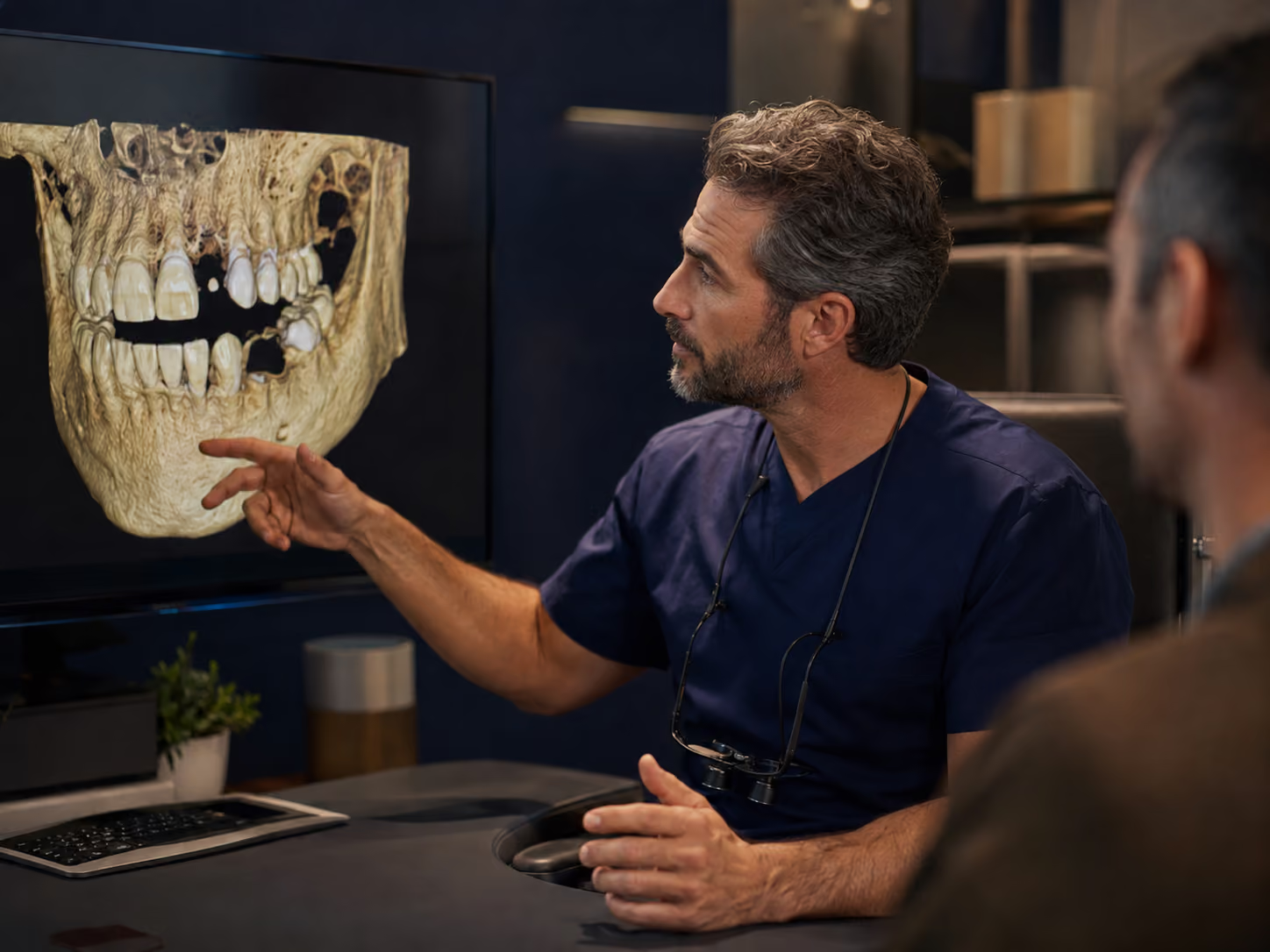
Implant placement
Surgical placement under IV sedation (or local, if you prefer). Bone grafting is placed at the same time when needed. Usually 30–60 minutes, then home with care instructions.
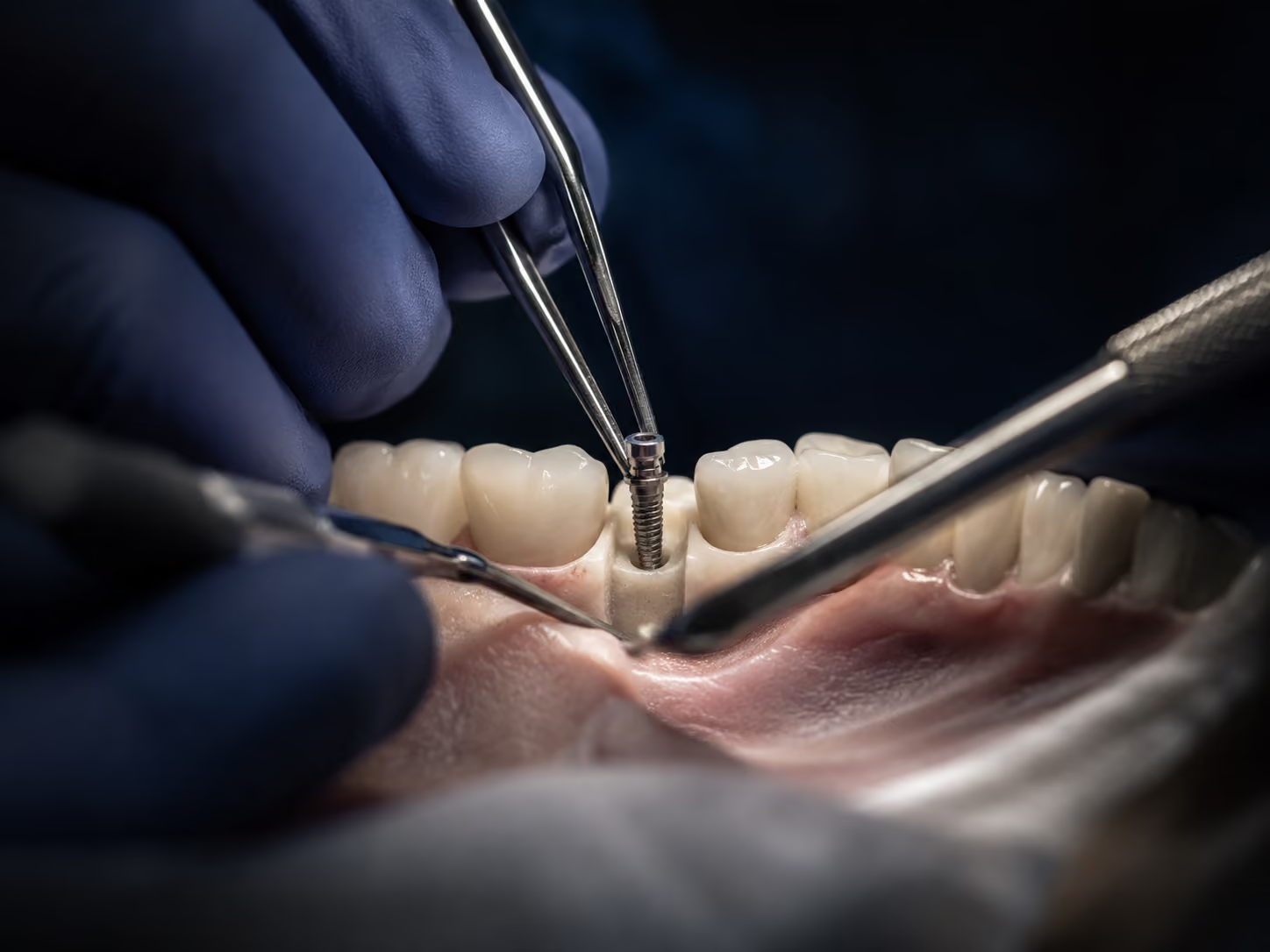
Osseointegration
The implant fuses with the surrounding bone over 3–4 months. A small healing cap sits at the gum line. We see you once during this period to verify healing.

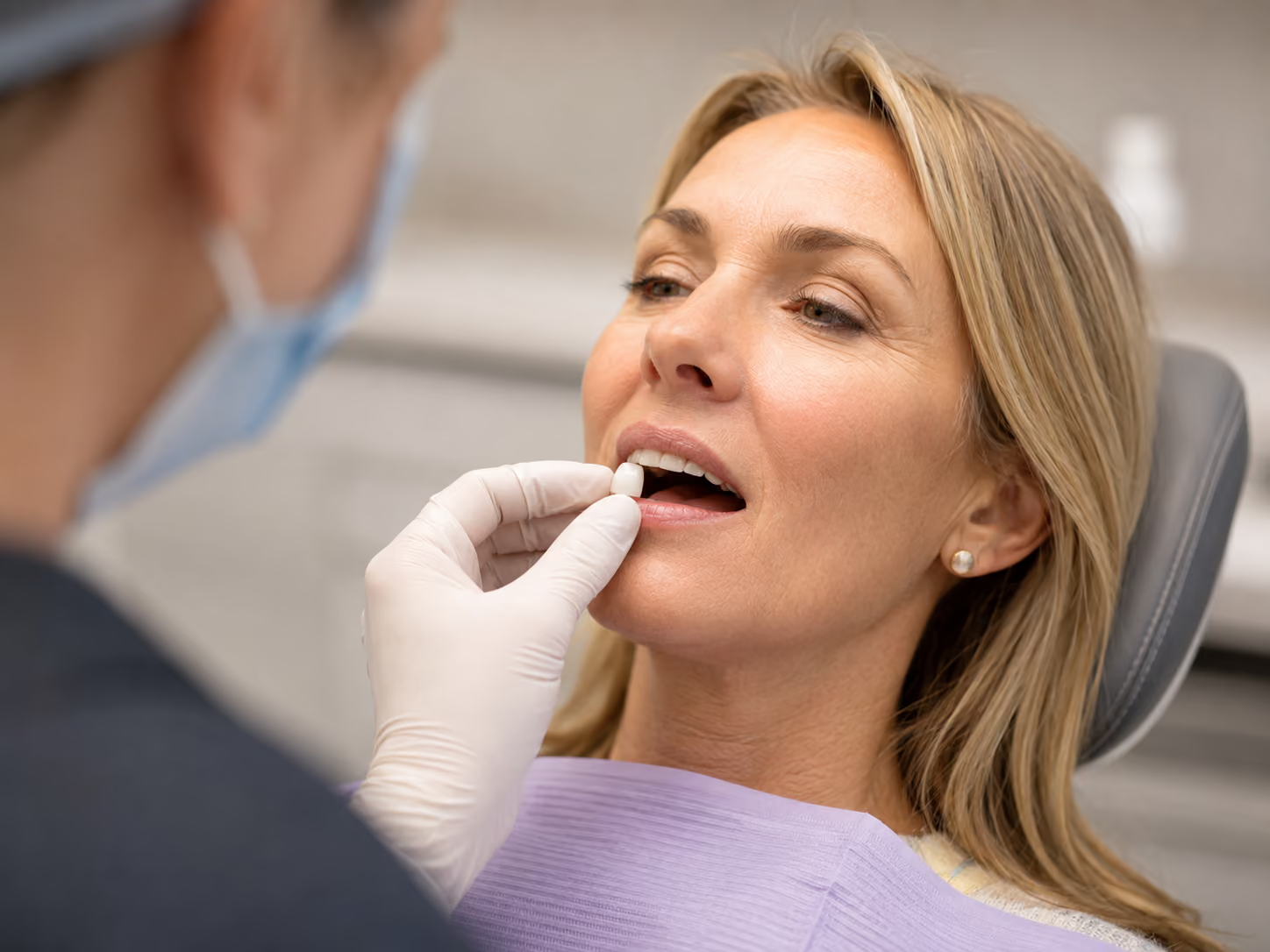
Final crown by your dentist
Once integration is confirmed, your general dentist takes impressions and places the final crown. We coordinate timing and share records throughout.
What the research shows on single implants.
Properly placed and maintained single implants are among the most predictable procedures in dentistry. The figures below reflect published clinical outcomes.
Calm, careful, and clear, every time.
One tooth, four options, side by side.
The tradeoffs that matter most for a single missing tooth, laid out plainly. Individual situations vary; we’ll walk through yours at consultation.
What single implants actually cost.
A complete single implant, surgical placement plus the final crown, typically runs $3,500–$6,000 in the South Sound market. Elite’s pricing falls within this range, itemized in writing before you schedule.
Insurance, HSA & FSA
Many dental plans now cover implant placement at 50–80% as a major service, with separate crown coverage. Medical insurance occasionally covers implants documented as medically necessary (post-trauma, post-cancer, congenital). We verify your specific coverage before treatment and provide a written estimate of patient responsibility. HSA and FSA funds are eligible for all components, effectively reducing your out-of-pocket cost by your marginal tax rate.
Answers, before you ask.
Under IV sedation, the procedure is painless, you’re asleep. Under local anesthesia, you’re awake but fully numbed. Either way you feel no pain during placement. Afterward, discomfort is similar to a tooth extraction: mild-to-moderate swelling for 3–5 days, managed with prescribed and over-the-counter medication. Most patients describe recovery as easier than expected.
The surgical placement itself is typically 30–60 minutes. Including IV sedation setup and recovery, plan for about two hours at our office on surgery day. You’ll need a driver home after sedation. Most patients return to normal, non-physical activity the next day; physical exertion is restricted for 2–3 days.
Properly placed and maintained implants have a 95%+ success rate at 10 years, and many last 25–30+ years. The crown on top typically needs replacement after 10–15 years, but the implant itself can last for decades. Maintenance includes regular hygiene and professional cleanings. Avoiding heavy smoking and addressing issues such as teeth grinding and gum disease can also help protect the implant long term.
Upfront, yes, typically $1,000–$1,500 cheaper. Over the realistic lifespan, no. A bridge usually lasts 10–15 years; by the second replacement cycle, one or both supporting teeth often fail from decay or fracture, leading to a longer bridge or implants placed in a site that has now lost bone. The realistic 30-year math: an implant totals roughly $6,000–$8,000; a bridge, $10,000–$18,000, while grinding down two healthy teeth in the process.
Failure rates are 2–5% over 10 years. Early failures (first 6 months) are usually integration problems; late failures are typically peri-implantitis from gum disease. Our standard policy: implants that fail in the first 12 months from integration problems are replaced at no additional surgical fee, you pay only for the new fixture and any required grafting. This is documented in writing in your treatment plan.
For some cases, yes, immediate placement with an immediate provisional is a recognized protocol when bone quality and stability support it. The provisional isn’t the final crown; it comes off at 3–6 months once integration is complete. Don’t be misled by “permanent teeth in one day” marketing for single implants, osseointegration takes months regardless of which crown is delivered first.
Multiple individual implants can be placed during the same surgical session. When the missing teeth aren’t adjacent, each implant receives its own crown and functions independently. For several adjacent missing teeth, an implant-supported bridge may be more cost-effective. If you’re missing all or most teeth in an arch, see our full-arch implants page.
For single implants, a referral is typically requested, not strictly required, but the workflow is most efficient when your dentist coordinates, since they know your history and will place the final crown. If you don’t have a general dentist, contact us and we’ll discuss options. For full-arch cases, no referral is required and consultations are complimentary.
Replace the missing tooth without compromising the others.
Schedule a consultation to discuss your specific case. You’ll meet Dr. Volland personally, review 3D imaging together, and receive a written treatment plan with itemized pricing. For single-implant cases, a referral from your general dentist is requested.