Asleep. Safe. And you won’t remember any of it.
For most surgical procedures at our office, IV sedation is the standard, and the option most patients prefer once they understand it. Administered by Dr. Jonathan Volland himself, with eight years of Naval surgical anesthesia experience and the certifications a hospital operating room expects.
What sedation involves, before you read any further.
The practical details most patients want to know first.
What IV sedation actually feels like.
If you’ve never had IV sedation, the most important thing to know is this: it doesn’t feel scary, it doesn’t feel like surgery, and you don’t remember it. Most patients wake up asking “is it done already?” Here is the visit, step by step.
Simple preparation.
Nothing to eat or drink for 6–8 hours beforehand, no alcohol or recreational substances for 24 hours prior, and a driver arranged to bring you home and stay with you afterward. Most patients arrive with a family member or friend who waits during the procedure.

Private suite, monitors on.
You’re brought to a private surgical suite where vital signs are taken and a small IV is placed, similar to a blood draw. Monitors track your heart rate, blood pressure, breathing, and oxygen throughout. Local anesthetic is given after sedation begins, so you don’t feel the injections.
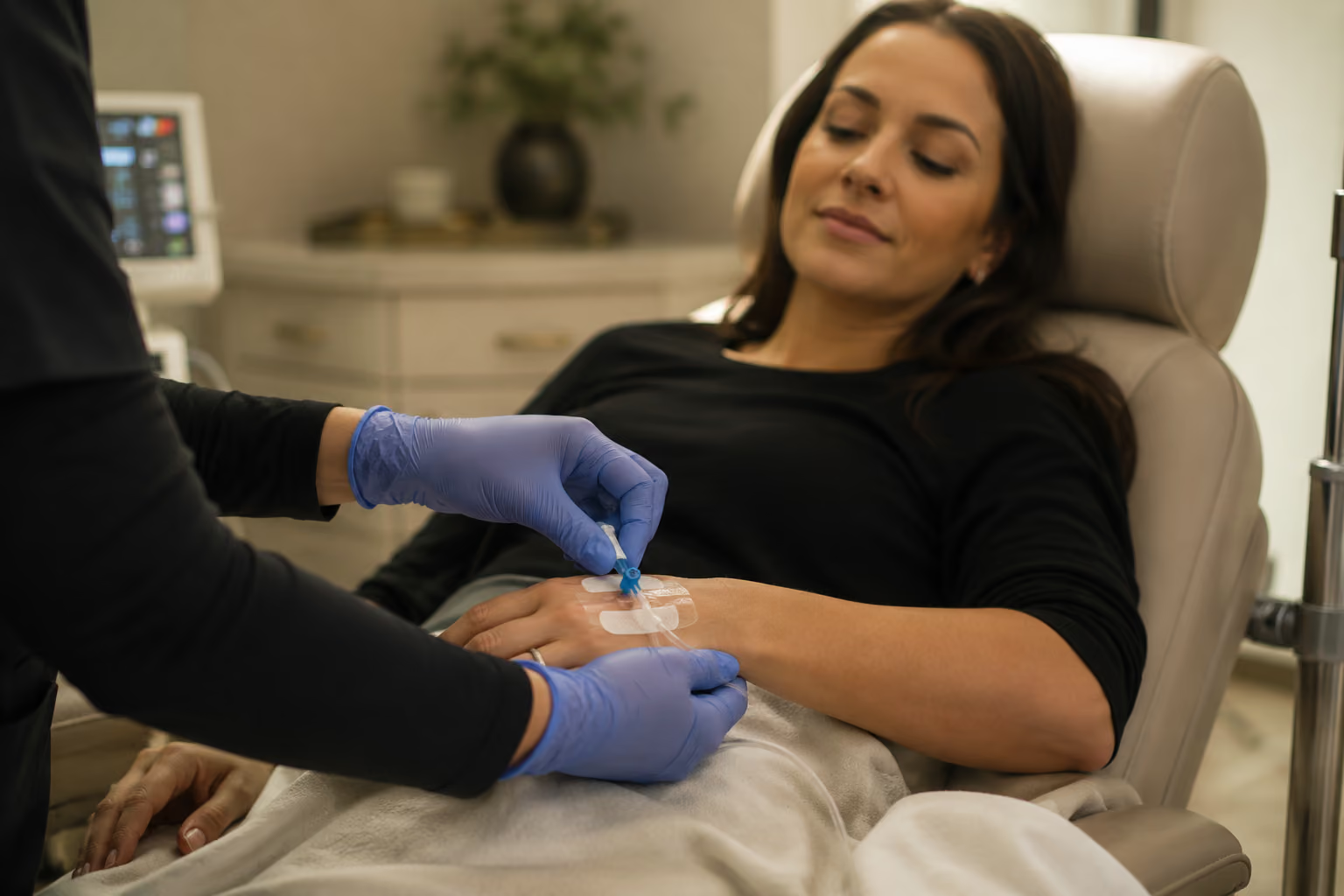
Relaxed within a minute.
Medications are administered through your IV. Within 30–60 seconds you become deeply relaxed and drift to sleep. You’re breathing on your own the whole time, this is what sets IV conscious sedation apart from general anesthesia. Your cough and swallow reflexes are preserved.

Continuously watched.
The procedure proceeds normally while you sleep, with Dr. Volland and the surgical team monitoring your vitals continuously. Most patients have no awareness of it happening; if you briefly stir, additional sedation is given immediately to return you to sleep.

Gradual and gentle.
The sedation is allowed to wear off naturally and you wake gradually over 10–30 minutes, often groggy at first. You’re moved to a monitored recovery area, and most patients are ready to go home with their driver within 30–60 minutes.

Rest and recover.
You’ll be drowsy for several hours and should not drive, work, or stay alone during that time. Most patients sleep for two to four hours after returning home. By evening, the sedative effects have usually worn off, although some surgical discomfort may remain.

Three levels: your choice, based on the procedure.
Different procedures and different patients warrant different approaches. The choice is yours after discussion at consultation. IV sedation is the default for most surgical procedures, but it is not the only option.
Local Anesthesia
IV Conscious Sedation
General Anesthesia
What it takes to administer IV sedation safely.
Office-based sedation requires specific training, licensing, and continuing certifications. The standard can vary meaningfully across providers. Here is what Dr. Volland brings to your sedation.
Board-certified Diplomate.
Requires an accredited residency, written and oral examinations, and demonstrated surgical competency, including formal training in office-based anesthesia administration.
Highest-level WA sedation permit.
A Department of Health permit authorizing general anesthesia and deep sedation in office settings. Requires demonstrated training, equipment standards, emergency protocols, and renewals with site inspections.
Cardiac emergency certification.
AHA certification in managing cardiac arrest, arrhythmias, stroke, and other cardiovascular emergencies. Standard for hospital surgical teams; less universal in office-based practices.
Pediatric emergency certification.
AHA certification in pediatric resuscitation and emergency management, relevant for adolescent patients receiving sedation, particularly wisdom teeth cases in 16–19 year olds.
Trauma management certification.
American College of Surgeons certification in acute trauma management, including airway management and hemorrhage control, relevant to any sedation-related airway or bleeding emergency.
Hospital-based anesthesia experience.
Eight years of active-duty practice including residency at Naval Medical Center Portsmouth and operational service aboard the USS Nimitz, experience that exceeds typical office-based training pathways.
How office-based sedation is kept safe.
In-office IV sedation by a board-certified OMS has an excellent safety record. The structural elements that make it safe are specific and verifiable.
Pre-sedation evaluation
Continuous monitoring
Emergency preparedness
Recovery monitoring
AAOMS: anesthesia in the oral surgery office
Procedures commonly performed with sedation.
Sedation is not assigned solely by procedure name. Two patients undergoing the same treatment may have different anesthesia needs based on surgical complexity, medical history, treatment length, and patient preference.
Wisdom teeth removal
IV sedation is standard for most impacted wisdom teeth cases, including removal of all four teeth in a single visit. It allows you to remain comfortable throughout the procedure while breathing on your own.
Surgical extractions
IV sedation is commonly used when teeth are broken, impacted, below the gum line, or have complex root anatomy. Local anesthesia is also used at the surgical site.
Single dental implants
Many single implant procedures can be completed with local anesthesia alone. IV sedation is available for patients who prefer additional comfort or when the procedure involves extraction, grafting, or added complexity.
Full-arch implant procedures
All-on-4, All-on-6, and other full-mouth implant procedures are typically performed under IV sedation. These longer procedures may include extractions, implant placement, bone grafting, and placement of temporary teeth in the same visit.
Zygomatic & remote anchorage implants
These advanced implant procedures may be performed under deep IV sedation or general anesthesia depending on the complexity of the case, surgical plan, and patient needs.
Snap-in denture implants
Implant placement for snap-in dentures may be completed with local anesthesia or IV sedation. The recommendation depends on the number of implants, whether extractions or grafting are required, and patient preference.
Bone grafting & sinus lifts
Smaller grafting procedures may require only local anesthesia. IV sedation is commonly used for larger grafts, sinus lifts, or when grafting is combined with extractions or implant placement.
What sedation costs, and how it’s covered.
IV sedation is priced by the duration required for your specific procedure. We verify your coverage before treatment and provide a written estimate of any patient responsibility.
Coverage varies by plan
Calm, careful, and clear, every time.
Nervous about the IV itself? Tell us at consultation.
Needle anxiety is common, and it’s the part most patients find hardest. We use small-gauge catheters, can apply numbing cream to the site, and, if anxiety is severe, can discuss an oral pre-sedation pill taken before the IV is placed. The insertion takes a few seconds and is over quickly. Let us know beforehand so we can plan for it.
Questions worth asking.
Office-based IV sedation by a board-certified oral and maxillofacial surgeon has an excellent safety record. Serious complications are reported at very low rates, although exact rates vary by study. Safety begins with a pre-sedation evaluation to identify higher-risk patients. Continuous monitoring, emergency equipment, reversal medications, and life-support training provide additional safeguards throughout the procedure. Dr. Volland’s qualifications include board certification, the Washington General Anesthesia Permit, full ACLS, PALS, ATLS, and BLS credentials, and eight years of hospital-based Naval surgical practice.
The main difference is the depth of anesthesia. With IV sedation, you continue breathing on your own and are placed in a deeply relaxed state. Most patients appear asleep and remember little or nothing about the procedure. General anesthesia produces a deeper level of unconsciousness and may require additional airway support. For many office-based oral surgery procedures, IV sedation provides the appropriate level of anesthesia, while general anesthesia may be used for select complex cases.
No. Local anesthesia is administered after sedation begins, so the surgical site is fully numbed before anything starts. The sedation eliminates anxiety and awareness; the local anesthesia ensures no pain at the site. Most patients have no memory of any discomfort. If you do have any awareness during the procedure, which is uncommon, additional sedation is given immediately to deepen your sleep.
No. Sedation medications can affect your judgment, reflexes, and coordination for several hours, even if you feel relatively alert. You must arrange for a responsible adult to drive you home and stay with you during your initial recovery. Rideshares and taxis are not appropriate substitutes because your escort needs to remain with you and monitor your recovery.
You’ll receive specific written instructions. In general: nothing to eat or drink for 6–8 hours before sedation (clear water up to 2 hours before is sometimes permitted), no alcohol or recreational substances for 24 hours, continue most prescription medications with small sips of water as directed, and arrange a driver. Wear comfortable clothing with sleeves that roll up for the IV, remove contacts, dentures, and piercings, skip heavy makeup and nail polish, and arrive 15 minutes early for vitals and final prep.
Needle anxiety is common. We use small-gauge IV catheters and can apply numbing cream beforehand if you let us know you are anxious. Insertion takes only a few seconds and is usually more uncomfortable than painful, similar to a blood draw. For most patients, it is brief and is often the most difficult part of the process. If your anxiety is significant, we can discuss additional options before your appointment to make the experience more manageable.
Coverage varies. Many dental plans cover IV sedation when it’s medically necessary alongside a surgical procedure, typically wisdom teeth, surgical extractions, and implant placement, while some classify it as elective. Medical insurance occasionally covers sedation for medically complex patients or medically necessary procedures. We verify your specific coverage before treatment and provide a written estimate. HSA and FSA funds are eligible and effectively reduce cost by your marginal tax rate.
Surgery shouldn’t feel like surgery.
If you’re scheduled for a procedure that may involve IV sedation, or you just want to discuss sedation options before scheduling, bring it up at your consultation. Most patients find it far less intimidating than expected once they understand what it actually involves.