Replace all of your teeth, with teeth that feel like your own.
Full mouth implants, full-arch implants, All-on-4, different names for one fixed result, planned and performed personally by Dr. Jonathan Volland in Bonney Lake, WA.
Fixed in your jaw. Not resting on your gums.
Full-arch implants replace all teeth in one or both jaws using four to six titanium implants per arch. The implants integrate with your bone, transmitting chewing forces like natural tooth roots, not sitting on top of the tissue like dentures.
The fixed difference
One bridge, several protocols
A structural solution
All-on-4, All-on-6, or zygomatic, matched to your anatomy.
The right protocol depends on your jawbone density, bite forces, and clinical situation, determined at consultation, after 3D imaging. Selection is a clinical decision, never a price-tier upsell: all three are priced identically at Elite.
All-on-4
The most-studied full-arch protocol. Standard for most patients.
All-on-6
Six implants when biomechanics warrant additional support.
Zygomatic
For patients told they're not candidates elsewhere.

What life looks like on the other side.
Patients rarely describe the surgery itself as the turning point. It’s the weeks after, the first uninterrupted meal, the first morning without a soak cup, that change how they talk about the decision.
Most patients who reach this page fall into one of three situations.
You’ve worn dentures that never quite fit. Your remaining teeth are failing faster than they can be repaired. Or you’ve just learned that extraction is coming and you don’t want a removable answer. If any of those sound familiar, a conversation is worth having.
Generally good candidates
Worth a closer conversation
Most of these are conditional, not disqualifying. Severe bone loss, in particular, is often still treatable, see the zygomatic protocol below.
From consultation to your final, permanent teeth.
Full mouth implant treatment spans approximately 12 weeks from surgery to final restoration. Here's the standard workflow with timing notes for what to expect at each visit.
3D imaging. A written plan.
Cone Beam CT imaging assesses your bone, sinus position, and overall anatomy. Medical history, sedation evaluation, and a written treatment plan with itemized pricing, before any surgical date is set.
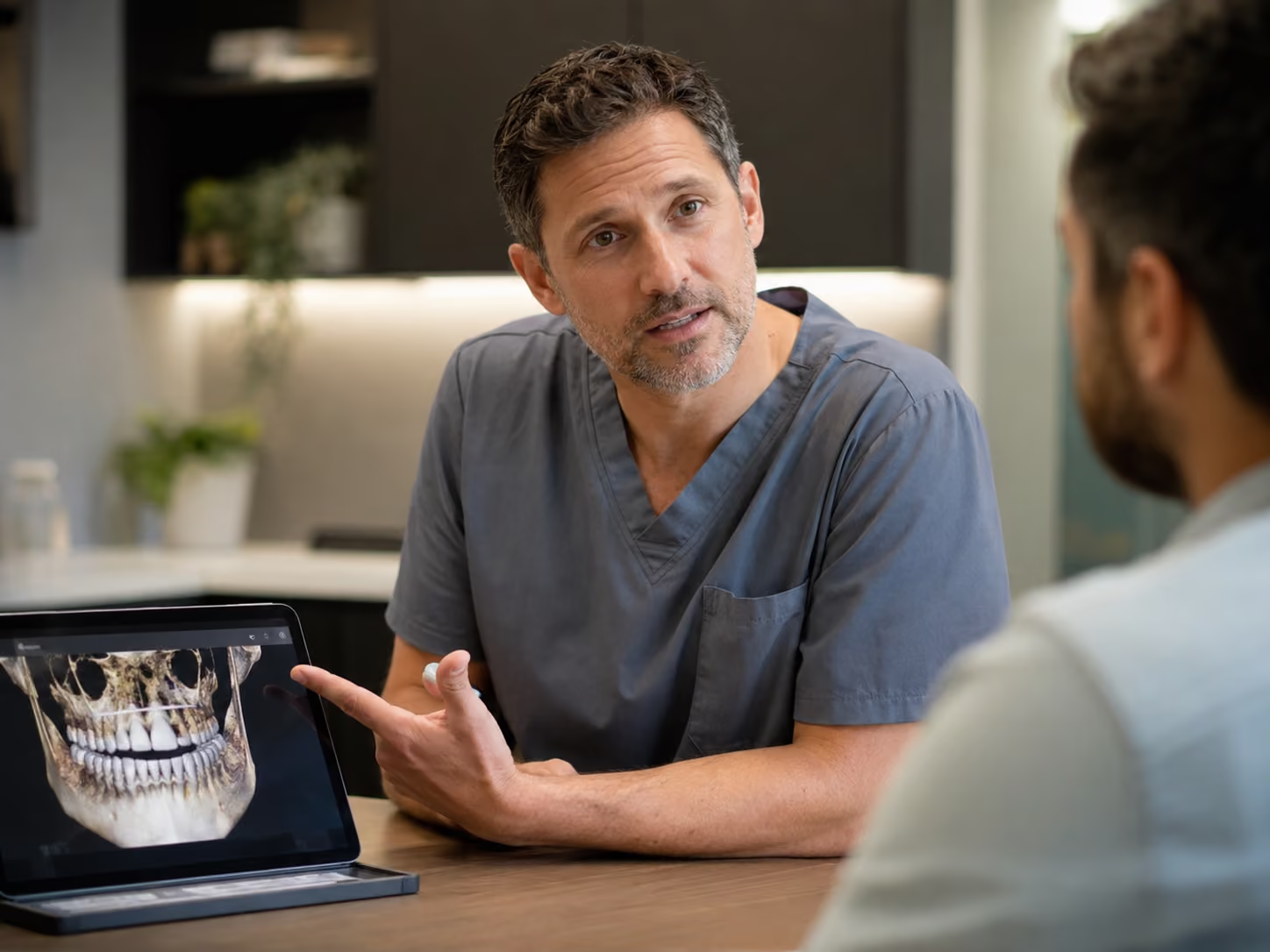
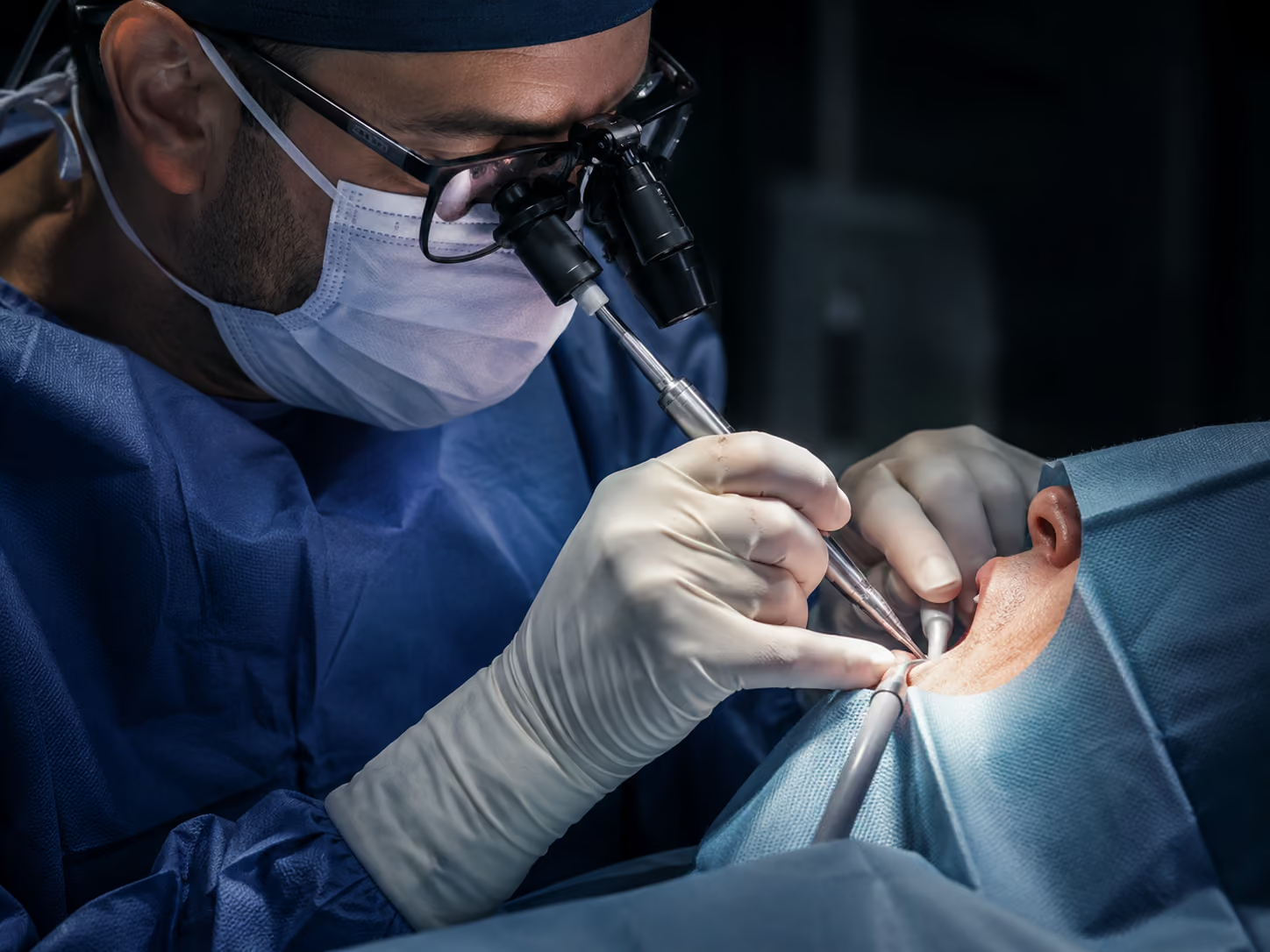
Surgical placement. Teeth the same day.
Implants placed under IV sedation. Remaining failing teeth removed in the same surgery if needed. A printed PMMA provisional bridge is seated before you leave. You go home that afternoon with a functional smile.
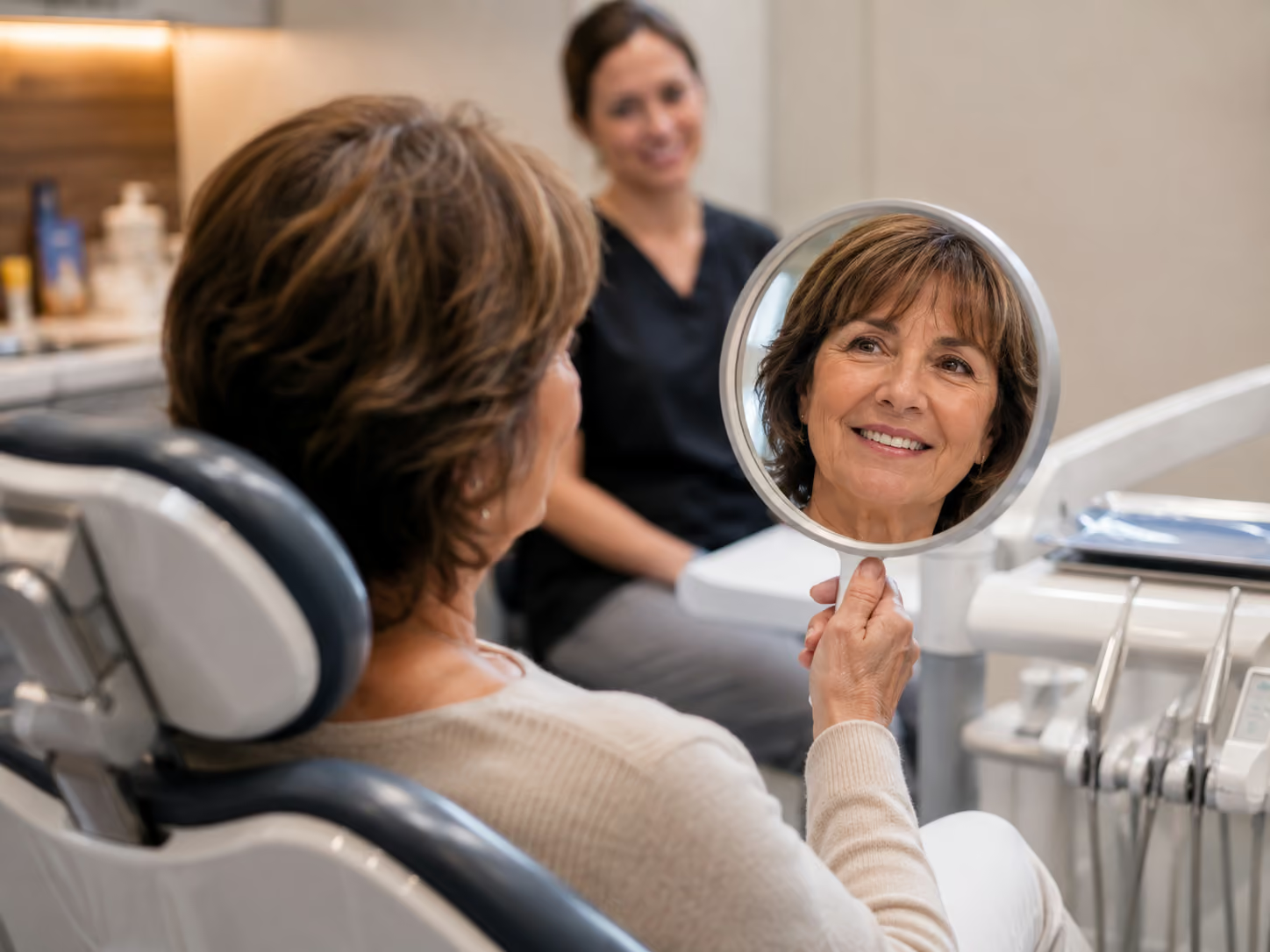
Prototype try-in. You approve the final design.
The provisional is evaluated for bite, speech, and aesthetics. A prototype of your final bridge is tried in. Adjustments are made with your input before zirconia is fabricated, you see and approve the result before anything is permanent.
Final zirconia delivery. The permanent prosthesis.
Your permanent zirconia bridge with titanium framework is seated by Dr. Volland. Fracture-resistant, stain-resistant, biocompatible. The bridge is screw-retained, not cemented, meaning it can be serviced if ever needed, but never removed by you.

Zirconia is included. Not an upgrade.
The most common upcharge in full-arch pricing elsewhere is the upgrade from acrylic to zirconia, typically $3,000–$8,000 per arch extra. Zirconia is our standard because it's the right long-term material.
What zirconia gives you
Included standard. No upcharge.
Two decades of published data.
Full mouth implant therapy isn’t new or experimental, it’s the most studied tooth-replacement protocol in implant dentistry.
Calm, careful, and clear, every time.
One price. Everything included.
Most full mouth implant practices in the Pacific Northwest charge $25,000–$45,000 per arch, often itemized separately for sedation, materials, and the final bridge. At Elite, the number below is the whole story.
From $185/month
Multiple lending partners. Decisions in minutes. HSA/FSA eligible. Payment plans structured around your budget.
First 40 surgical patients.
Reserved for patients who join the opening list. Applied at consultation, no commitment required to secure your place.
Answers, before you ask.
"Full mouth dental implants" is the broad consumer term for replacing all teeth in a jaw with implants. "All-on-X" is a generic clinical term covering the family of protocols (All-on-4, All-on-5, All-on-6, etc.). "All-on-4" is the most-common specific protocol, four implants per jaw supporting a complete bridge. They all describe the same general concept; the differences are in implant count and clinical indication.
For patients researching options, the terminology can be confusing. The key distinction: "all-on-X" terms refer to specific protocols; "full mouth implants" is the broader category. We use the term that matches what each patient is researching.
Surgery day takes approximately 4-6 hours total at our office, including IV sedation setup, surgical procedure, and same-day provisional placement. The actual surgical procedure is typically 3-5 hours depending on whether teeth need to be extracted, whether one or both jaws are being treated, and the specific protocol selected.
You arrive in the morning under IV sedation, sleep through the procedure, and are typically discharged by mid-afternoon. You'll need a driver to take you home. IV sedation requires a sober adult driver regardless of distance.
Same-day provisional teeth are placed at the surgical visit. You leave with teeth, not without them. The final, permanent zirconia bridge is fabricated and placed 10 to 12 weeks after surgery, once the implants have integrated with bone (osseointegration).
The provisional teeth are functional and aesthetic, and most patients are surprised at how natural they look. The transition from provisional to final happens at week 10 to 12, after a try-in at week 8 to verify fit and bite.
Some chain implant centers market "permanent teeth in 24 hours." That framing is misleading, because osseointegration takes months regardless of which prosthesis is delivered on day one. The biology doesn't change based on the marketing language used. Honest workflows describe same-day provisional teeth at surgery and final restoration at week 10 to 12.
The procedure itself is performed under IV sedation. You'll be asleep and won't remember it. Local anesthesia is administered after sedation begins, so the surgical site is fully numbed before any work starts.
Post-operative discomfort is real but manageable. Most patients describe the recovery as easier than they expected: mild to moderate swelling and tenderness for 3 to 7 days, managed with prescribed pain medication and over-the-counter options. Most patients return to normal activities within 5 to 7 days. Soft food diet for the first week.
The implants themselves typically last 20 to 30 years or more with appropriate maintenance. Published clinical data shows 94.8% implant survival at 10 years and 93.0% at 10 to 18 years for All-on-4 cases. The zirconia bridge on top of the implants typically lasts 20 years or more before any maintenance is needed.
Maintenance involves regular hygiene at home, professional cleanings every six months, and avoiding behaviors that compromise implants, such as heavy smoking or untreated grinding. For most patients the practical benefit is straightforward: the ability to eat normally again, without the limitations dentures impose.
For most patients facing full-mouth tooth loss, yes, meaningfully. Dentures are removable and don’t preserve jawbone; full mouth implants are fixed, function like natural teeth, and stimulate the bone underneath. Dentures remain a legitimate choice for patients who can’t or don’t want surgery.
Many patients turned away elsewhere as "non-candidates" are candidates here. The zygomatic protocol anchors implants in the cheekbone rather than the resorbed upper jaw, bypassing the bone loss entirely. A second opinion, with fresh 3D imaging, is often worth getting.
We verify your specific dental insurance coverage before treatment and provide a written estimate of patient responsibility. For full mouth cases, dental insurance typically provides limited coverage, though medical insurance may cover meaningful portions when the case qualifies as medically necessary.
Financing is available through several partners (Cherry, Proceed, Sunbit, LendingClub, CareCredit). See our financing page for partner options, terms, and the payment calculator. HSA and FSA funds are eligible for all our procedures.
City guides to full mouth dental implants.
Dedicated guides for patients researching from specific South Sound and Puget Sound cities, local pricing context, drive logistics, and what to expect making the trip to Bonney Lake.
Tacoma
Seattle
Federal Way
The first step is a conversation, not a commitment.
Full mouth implant consultations are complimentary, including 3D imaging and a written treatment plan with itemized pricing. You’ll meet Dr. Volland personally and find out, plainly, what your case requires.